Scholarly Bible Editions
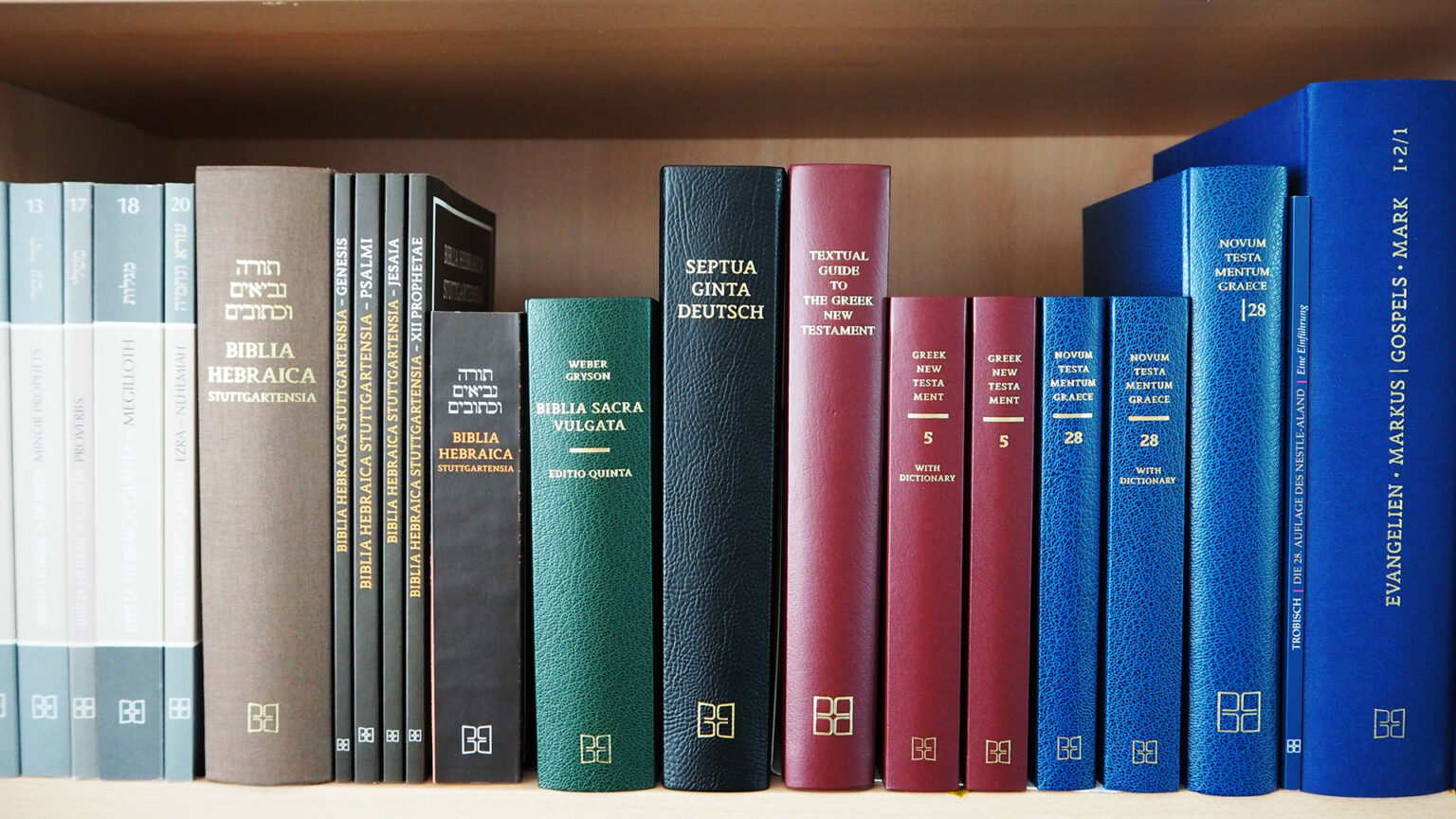
The German Bible Society is internationally recognized as the publisher of critical editions of the Hebrew Old Testament (BHS and BHQ), the Greek New Testament (Nestle-Aland and UBS Greek New Testament), as well as the Septuagint and the Vulgate. These editions are essential resources for exegetical study, translation work, and theological research worldwide.
Old Testament
The Biblia Hebraica has been published as a scholarly edition of the Old Testament since the 1920s. The Biblia Hebraica Stuttgartensia (BHS), completed in 1977, is nowadays regarded worldwide as the standard reference work for research on the Hebrew text of the Old Testament. Continuing this tradition into the 21st century, the Biblia Hebraica Quinta (BHQ) represents the next generation of critical editions.
Since its first publication in 1935, Alfred Rahlfs’ edition of the Septuagint has served as a cornerstone of Septuagint research around the globe. The edition was revised in 2006 by the distinguished scholar Robert Hanhart. In early 2009, the German Bible Society also released the Septuaginta Deutsch, the first complete German translation of the Septuagint.
The most widely used scholarly text of the Vulgate today is the Biblia Sacra Vulgata, edited by Robert Weber and Roger Gryson. This edition presents a reconstructed Latin text of the Bible accompanied by a comprehensive critical apparatus documenting textual variants.


New Testament
The Novum Testamentum Graece, edited by Eberhard Nestle, was first published in 1898 by the Württemberg Bible Society in Stuttgart. This edition synthesized key results of 19th-century New Testament textual research. Over time, the “Nestle-Aland” has become the standard critical edition for scholarly study of the original text of the New Testament.
In the 1960s, a complementary edition was introduced: the UBS Greek New Testament. Its critical apparatus was specifically designed to meet the needs of Bible translators worldwide.
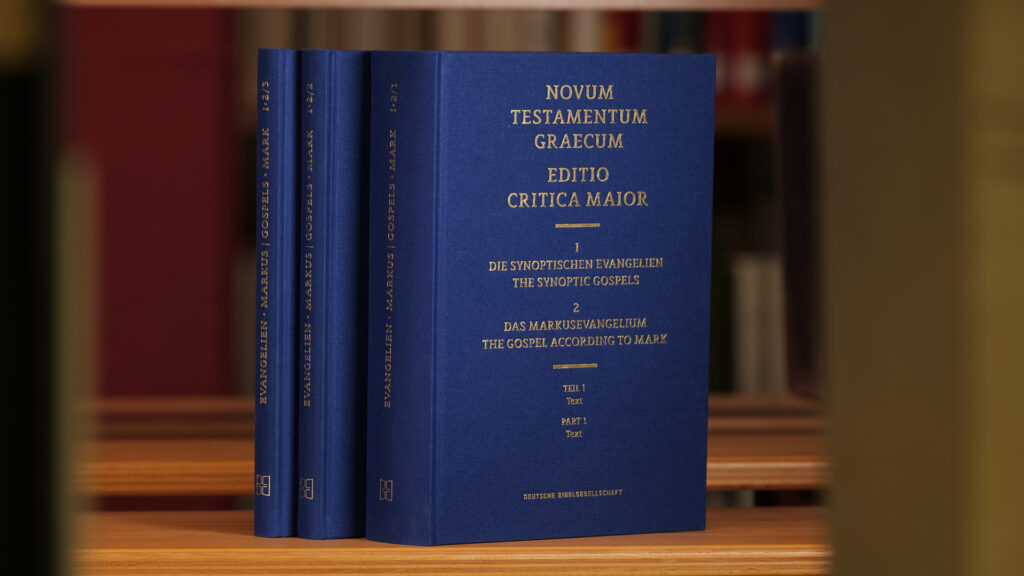
Both of these hand editions of the Greek New Testament are complemented by a comprehensive critical project that has been under development since the 1990s: the Editio Critica Maior.