
Editio Critica Maior (ECM)
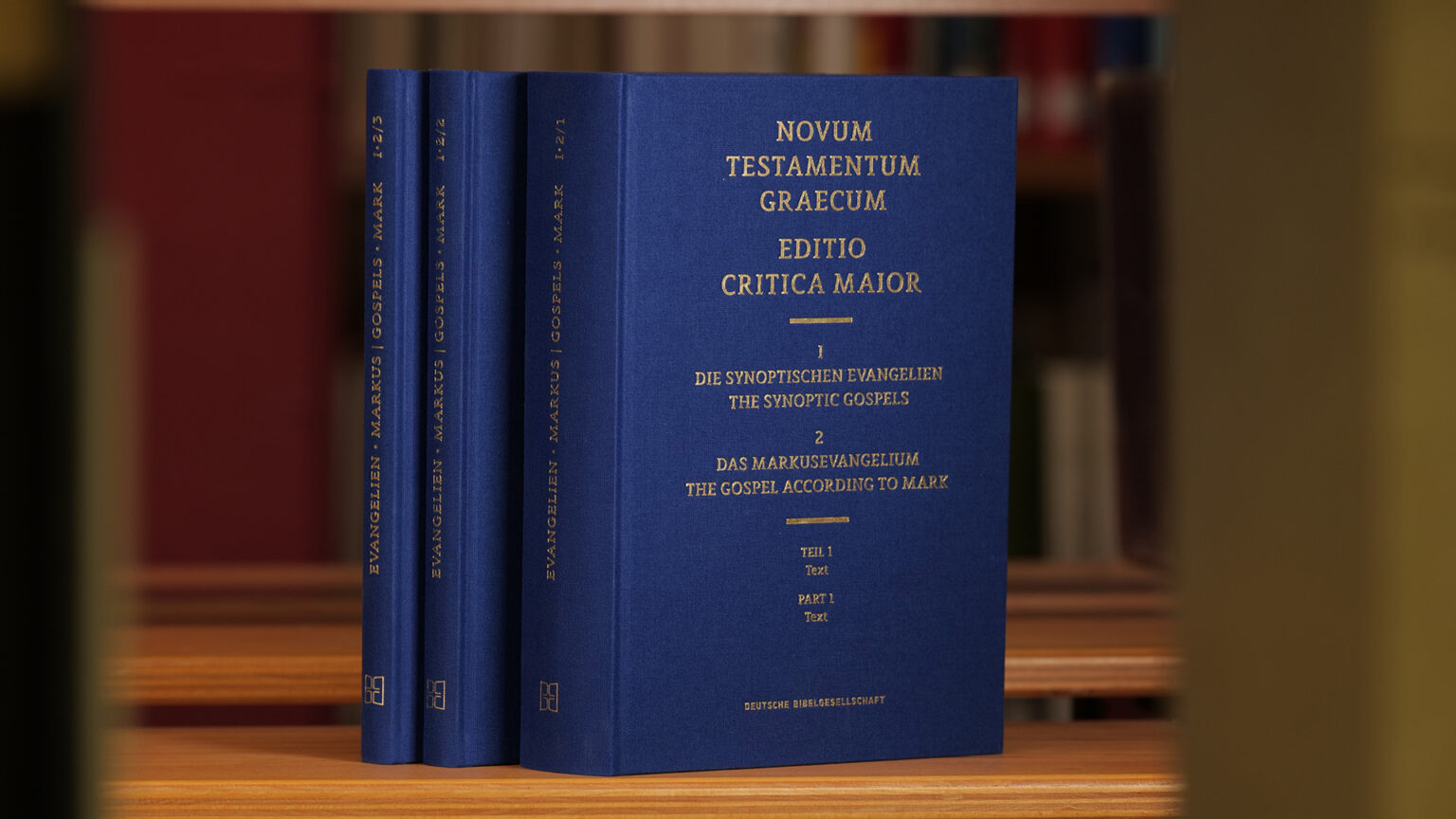
The Editio Critica Maior (ECM) is the most comprehensive and methodologically advanced critical edition of the Greek New Testament to date. Edited by the Institute for New Testament Textual Research (INTF) in co-operation with teams of scholars worldwide, it seeks to reconstruct the earliest attainable text of the New Testament by drawing on the entire manuscript tradition, early versions, and patristic citations. The ECM thus provides both a fundamental resource for scholarly research and the textual basis for future editions such as the Nestle-Aland and the UBS Greek New Testament.
In contrast to earlier editions that offer a single eclectic text supported by a selective apparatus, the ECM presents a broad documentation of textual variation. Each volume contains an extensive apparatus listing all significant readings from a representative range of Greek manuscripts—up to about the tenth century—as well as from key early versions (Latin, Syriac, Coptic, Armenian, Georgian, etc.) and early Christian authors. This allows scholars to study the transmission and development of the text with exceptional precision.
The edition is published in installments. It started with the Catholic Letters (1997), followed by Acts (2015), the Gospel of Mark (2021), and Revelation (2024). The volume on Matthew is expected in 2026. Each volume includes (1) the reconstructed main text with a detailed apparatus, (2) supplementary material referring to the text-critical apparatus, and (3) a commentary on selected variants as well as studies on early translations and patristic tradition.
A distinctive feature of the ECM is its use of the Coherence-Based Genealogical Method (CBGM), developed by the INTF. This digital method analyzes relationships between textual witnesses by their genealogical coherence, offering a more dynamic understanding of textual history. The CBGM has significantly reshaped modern New Testament textual criticism.
In summary, the Editio Critica Maior marks a major milestone in New Testament textual research. Combining traditional philological rigour with innovative digital tools, it offers an authoritative reconstruction of the text and a strong foundation for the study of its complex transmission within early Christianity.