
Biblia Hebraica Quinta (BHQ)
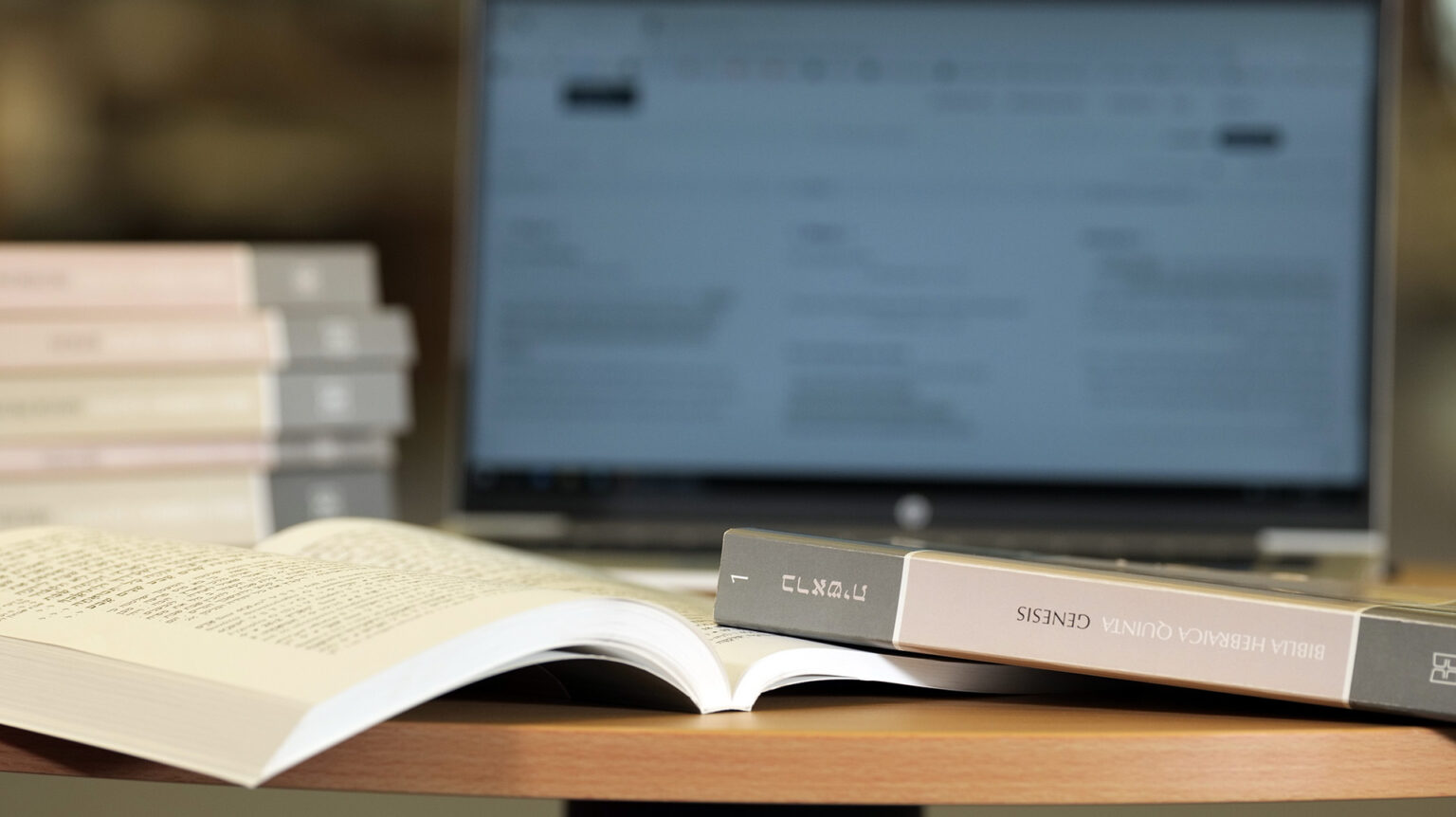
Biblia Hebraica Quinta (BHQ)
The Biblia Hebraica Quinta (BHQ) is the successor to the Biblia Hebraica Stuttgartensia (BHS). A central goal of this edition is the comprehensive documentation and evaluation of all existing textual variants of the Hebrew Bible. To this end, an international and interdenominational team of scholars is undertaking a thorough revision of the Hebrew Masoretic Text as preserved in the Codex Leningradensis and other ancient textual witnesses. The complete edition will consist of twenty individual volumes, roughly half of which have already been published. When completed, BHQ will be a one-volume edition accompanied by a one-volume text critical commentary that provides information and discussion beyond that contained in the apparatus of the text volume. These are the main features of the edition:
- Base Text and Masorah: A diplomatic presentation of the text and Masorah (magna and parva) of the manuscript EBP. I B 19a of the National Library of Russia in St. Petersburg, commonly known as the Leningrad Codex. The edition is based on new colour photographs produced by the Ancient Biblical Manuscript Center in Claremont, California. As the oldest complete manuscript of the Hebrew Bible, the Leningrad Codex serves as the base text against which all other witnesses are collated.
- Poetic Layout: Poetic texts will be arranged stichographically, following the Masoretic accents and, where appropriate, the syntactic divisions.
- Critical Apparatus: At the foot of each page, a critical apparatus summarizes all cited textual witnesses and variants. An entry is included whenever a pre-Tiberian witness possibly—though not necessarily, and not even necessarily in the editor’s opinion—provides a Hebrew text differing from the Tiberian tradition.
- Comprehensive Witnesses: All available pre-Tiberian witnesses are noted for each textual case, providing a wealth of new material.
- Collation of Codices: At least two additional Tiberian codices are collated for every biblical book.
- Qumran and Judean Desert Texts: Fragments from Qumran and other Judean Desert sites are fully collated.
- Editorial Commentary: The editors frequently indicate aspects they consider to have influenced the development of textual variants, enabling readers to assess the various readings more easily.
- Representation of the Masorah: The Masorah magna, as it appears in the Leningrad Codex, is printed between the biblical text and the critical apparatus on each page of the edition. The Masorah parva, also following the Leningrad Codex, is printed in the lateral margins of each page. Every note in the Masorah magna is translated into English and included in the commentary section of the fascicles. The translation of the Masorah parva can be made by the reader with the help of the glossary of standard terms; for less common notes, an English translation is provided. Where appropriate, both the Masorah magna and the Masorah parva are discussed and commented upon by the editors to aid understanding.
To ensure accessibility, the apparatus and commentary are presented in English rather than Latin.
A general introduction in English, German and Spanish (contained in vol. 18) accompanies this new edition. It outlines the characteristics of the base text and Masorah, explains the particular use of the individual resources, and clarifies the relationship of BHQ to BHS and previous editions. Moreover, this general introduction clarifies the principles of collation and citation of witnesses and contains a comprehensive list of sigla and abbreviations used in the edition.
An introduction to each biblical book discusses the book's particular textual features and characterizes its textual witnesses.
BHQ Fascicles and its Editors
Fascicle | Editor | Publication |
Genesis | Abraham Tal (Tel Aviv) | published (2016) |
Exodus | Peter Schwagmeier (Zürich) | in preparation |
Leviticus | Innocent Himbaza (Fribourg) | published (2020) |
Numbers | Martin Rösel (Rostock) | in preparation (2026) |
Deuteronomy | Carmel McCarthy (Dublin) | published (2007) |
Joshua | Seppo Sipilä (Helsinki), | in preparation |
Judges | Natalio Fernandez Marcos (Madrid) | published (2011) |
Samuel | Stephen Pisano (Rome), | in preparation |
Kings | Adrian Schenker (Fribourg), | in preparation |
Isaiah | Arie van der Kooij (Leiden) and | in preparation |
Jeremiah | Richard D. Weis (Lexington) and | in preparation |
Ezekiel | Johan Lust (Leuven), | in preparation (2025) |
Twelve Prophets | Anthony Gelston (Durham) | published (2010) |
Chronicles | Zipora Talshir (Beer Sheva) and Dalia Amara (Beer Sheva) | in preparation |
Psalms | Gerard J. Norton (Dublin), | in preparation |
Job | Robert Althann (Rome) | published (2024) |
Proverbs | Jan de Waard (Strasbourg) | published (2008) |
General Introduction and Megilloth | published (2004) | |
- Ruth | Jan de Waard (Strasbourg) | |
- Canticles | Piet B. Dirksen (Leiden) | |
- Qoheleth | Yohanan A.P. Goldman (Fribourg) | |
- Lamentations | Rolf Schäfer (Stuttgart) | |
- Esther | Magne Sæbø (Oslo) | |
Daniel | Augustinus Gianto (Rom) and | in preparation |
Ezra and Nehemiah | David Marcus (New York) | published (2006) |
Current Editorial Committee
Adrian Schenker, Fribourg (president)
Innocent Himbaza, Fribourg
Arie van der Kooij, Leiden
David Marcus, New York
Craig Morrison, Washington
Martin Rösel, Rostock
Rolf Schäfer, Stuttgart
Project Coordinator
Attila Bodor, Stuttgart/Budapest
Copy Editor
Sarah Lind, Madison
Consultants
Viktor Golinets, Heidelberg (Leningrad Codex)
Malka Strasberg-Edinger, New York (Masoretic Text)
Programming
Tobias Lichti, Stuttgart
Soetjianto, Wyndmoor
Previous Editorial Committee Members
Yohanan A. P. Goldman, Fribourg
Carmel McCarthy, Dublin
Gerard J. Norton, Dublin
Stephen Pisano, Rome
Jan de Waard, Strasbourg
Richard D. Weis, Lexington
Previous Copy Editors
Roger Omanson, Louisville
Harold Scanlin, Allentown
Previous Consultants
Aron Dotan, Tel Aviv (Masorah)
Alan Groves, Glenside (Data management)
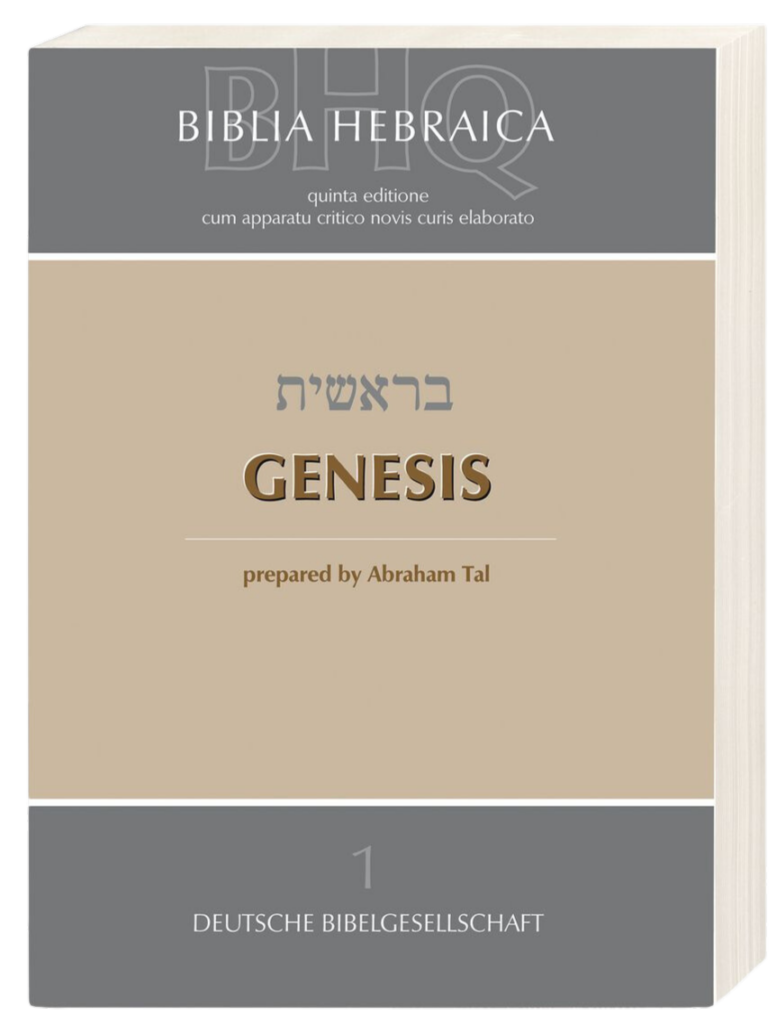
Biblia Hebraica Quinta (BHQ)
The Biblia Hebraica Quinta (BHQ) is a completely new critical manual edition (editio minor) of the Hebrew Bible, continuing the legacy of the Biblia Hebraica. It provides scholars and serious Bible readers with a clear and reliable presentation of the extant textual witnesses to the Hebrew Bible, focusing on those most relevant for translation and interpretation.